
Role-based dashboards and menus#
Overview#
New installs of Automate 25.1 ship with a collection of pre-defined, default roles and associated elements to deliver a set of new layouts for the Automate user interface:
Note
By default, Automate also ships with two additional roles - these existed prior to 25.1:
HcsAdmin - This user logs in on first install to create a provider admin, and optionally, to create admin users for the other hierarchies (customer, site, reseller) out of the cloned default roles created when adding a provider. Alternatively, the newly created provider admin user can now log in to create the other admin users out of the cloned roles at the provider level, and can hand over further configuration of each hierarchy to the relevant admin users, or configure Automate for all hierarchies.
selfservice - The default Self-service role, which is used only with the Self-service interface
Default roles
Each of the default Automate roles (Automate - Admin role, Automate - Service Desk role, Automate - Analyst role) is assigned a GUI layout, comprising a Home dashboard (landing page), and a set of predefined dashboards and menus offering access to features designed for their user experience. The role-based layouts follow best practices and serve as a starting point for common personas. While they offer a strong foundation, you should customize them to fit your needs - for example, you’ll be able to adjust actions and fields exposed via field display policies, customize naming conventions, and modify help text and descriptions to align with your user base. This ensures an optimized experience, reduces adoption challenges, and minimizes training requirements. Contact your account manager if you need guidance towards developing an operationally sustainable approach.
Roles are combined with a number of elements (such as permissions, menus, dashboards, access profiles, and themes) to define the look and feel of the system for particular user experiences. You can clone and customize the pre-built layouts to create custom layouts.
Note
Some menus and pages have been renamed in 25.1. It is recommended that you use the toolbar Search functionality to search for models, functionality, and other entities so that you won’t need to remember any particular menu paths. For example, to search for page by its name, use the Action search. Refer to Use the Action search to navigate Automate. For details on all the Global and Filter search, refer to Search in Automate
Hierarchy considerations
Automate’s default roles can typically be assigned to users at any level in the hierarchy to pair the role capabilities with a given scope. For example, a specific customer in a Provider environment, or specific sub-unit in a business for Enterprise.
Dashboards may need to be adjusted to reflect the appropriate hierarchy level. For example, change group from Customer, which is useful for Provider, to perhaps, by Site.
GUI layouts in earlier versions of Automate
Earlier versions of Automate (pre-25.1) shipped with three sets of pre-built menus:
Default menu layouts
Best practice menus (enhanced menus)
Menu layouts for a Business Admin role
Important
If you’re upgrading to Automate 25.1 from an earlier version, your GUI layout remains unchanged unless you choose to configure your role and access profiles to switch to the new GUI layouts.
Related topics
Automate - Admin role#
The Automate - Admin role is an experience designed for application administrators. This role provides broad access to setup, settings, and system actions. It serves as a model for advanced admins and offers insight into overall functionality.
The table describes the default GUI layout for the Automate - Admin role:
Landing page dashboard |
Menu layout |
Access profile |
Hierarchies |
|---|---|---|---|
Automate - Admin Home |
Automate - Admin |
Automate - Admin |
|
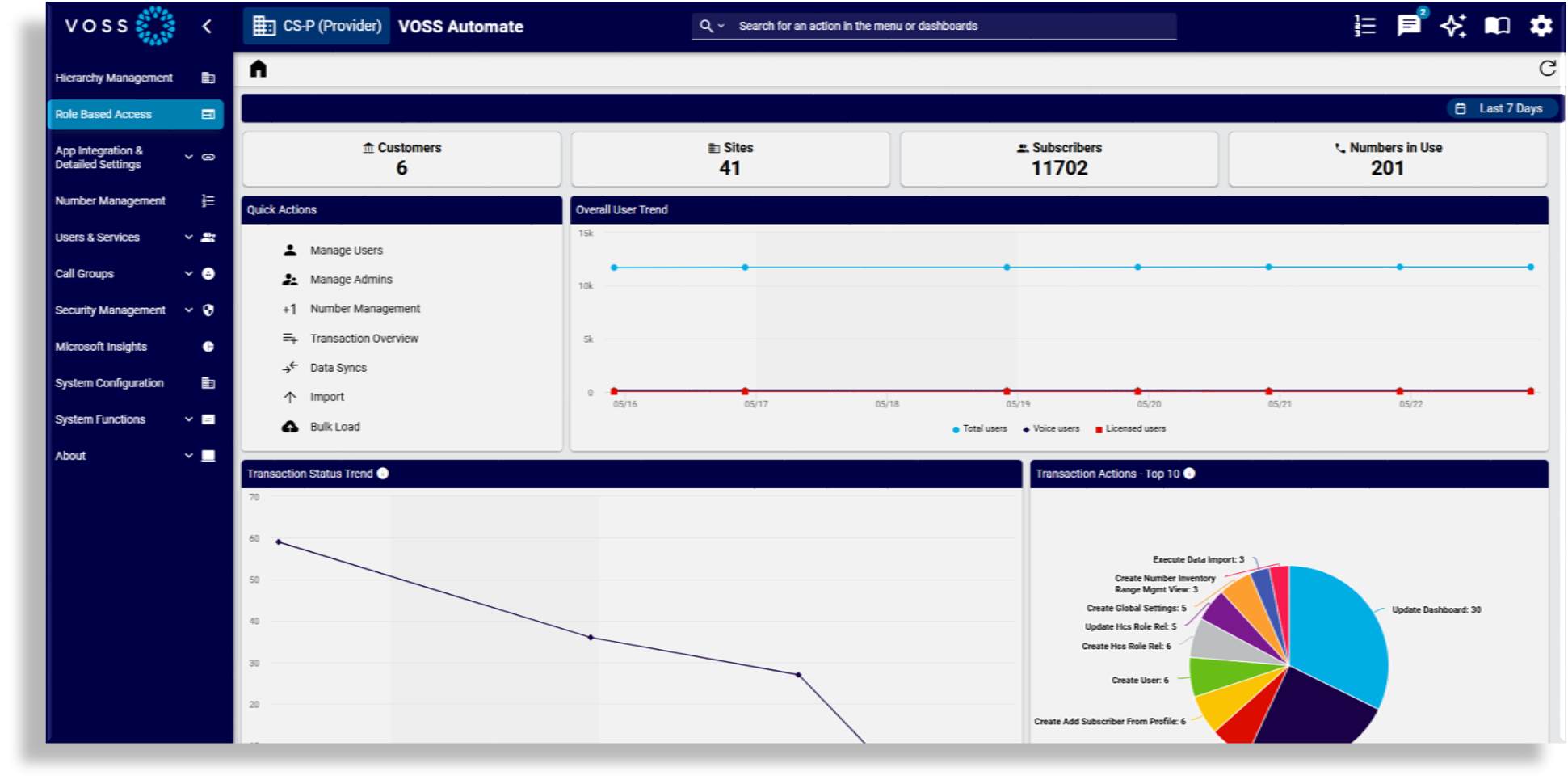
Automate - Admin Home dashboard
The Automate - Admin role’s landing page is the Automate - Admin Home dashboard. Landing pages display a selection of counters and quick actions curated for the role.
Related topics
Automate - Service Desk role#
The Automate - Service Desk role is an experience tailored for users performing typical, day to day system operations, including set up and configuration, and requiring access to data for troubleshooting and other operational tasks. This role is suitable for help desk/service desk users, delegated administrators in Provider environments, or business sub-units in enterprises.
The table describes the default GUI layout for the Automate - Service Desk role:
Landing page dashboard |
Menu layout |
Access profile |
Hierarchies |
|---|---|---|---|
Automate - Admin Home |
Automate - Service Desk |
Automate - Service Desk |
|
Related topics
Automate - Analyst role#
The Automate - Analyst role is an experience intended for users who need system visibility without making changes. It enables access to data for consuming dashboards, for performing searches, and for completing other analytical tasks, and is designed for stakeholders that need visibility of key metrics and information while offering more dynamic insights than traditionally static reports.
The table describes the default GUI layout for the Automate - Analyst role:
Landing page dashboard |
Menu layout |
Access profile |
Hierarchies |
|---|---|---|---|
Automate - Analyst Home |
Automate - Analyst |
Automate - Analyst |
|
Related topics