
Arbitrators#
Overview#
Managing Insights Arbitrators in Automate requires the following:
A License Mode for Insights Collaboration Assurance - see: Manage your Automate product license.
Set up Arbitrators
Set up host connection details and credentials (the admin user and password from the Arbitrator)
Note
See the Insights documentation for Arbitrator setup.
Add a connection to the Arbitrator server#
This procedure provides connection details to the Arbitrator server to integrate Automate with the Arbitrator server.
Note
Once the integration is complete:
The Arbitrator is available to onboard and offboard assets that are added or are available in Automate.
For example, if a MS Tenant is managed in Automate (Configure Microsoft tenant connection parameters), the corresponding MS tenant is shown and managed on the associated Arbitrator, for example:
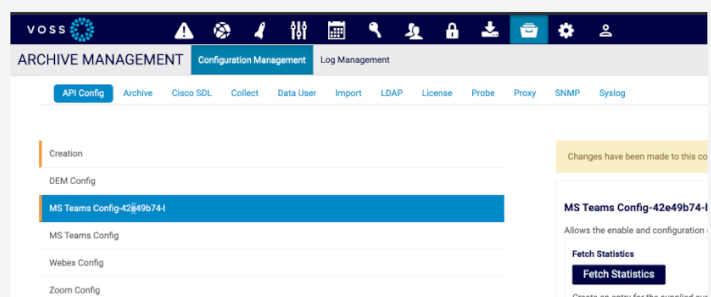
Also verify that the MS Tenant configuration includes a secret set up - see Configure Microsoft tenant connection parameters.
If Assurance is selected as Data Source to manage dashboard widgets, options are available to choose it as a Data Source Instance, since multiple instances can be configured. See: Chart widgets and Table widgets.
In the Automate Admin Portal, go to Arbitrator (Insights).
Click the Plus icon (+) to add an Arbitrator.
Fill out Arbitrator details:
Server Name
Name of the Insights Arbitrator server in Automate. Field tooltip provides naming convention.
Description
Optional. Provide a description.
Host Name
Host name or IP address of this Arbitrator server, which is used to connect to the Arbitrator.
API Username
Username for a valid admin account; an admin user allowed to log in to the Arbitrator server.
API Password
Password credential of a valid admin account; an admin user allowed to log in to the Arbitrator server.
Database Password
The Arbitrator database password (this password can be changed from the default on the Arbitrator CLI -
Data Center
The name of the data center where the Arbitrator server is deployed. Used as the location when Arbitrator assets are created.
Sync on Create/Update
When enabled (selected) Arbitrator server (based on Host Name) data is synced in to Automate (pull sync).
Click Save.
A data sync instance is created:
SyncAssuranceArbitrator__<arbitrator-name>A data sync instance is created:
PurgeAssuranceArbitrator__<arbitrator-name>A test connection is automatically carried out when saving the arbitrator details and it can also be used to manually verify input details and connection to the Arbitrator host (via the Action menu).
The new Arbitrator server is added to the list of Arbitrators displayed on the Arbitrator summary list view.
Note
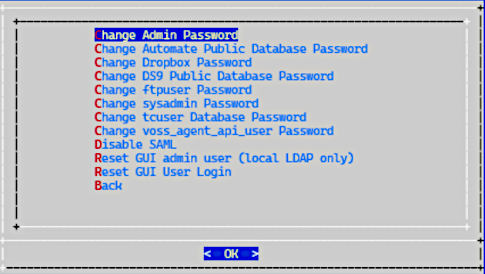
The Arbitrator default database password for Automate can be managed from the Arbitrator on the Change Passwords command line menu on the Arbitrator. For details on the Arbitrator command line menus, refer to the Arbitrator Install Guide and Dashboard and Arbitrator Maintenance and Upgrade Guide.
To carry out this task, choose: Change Automate Public Database Password from the menu.
Next Steps
CUCM and CUC servers can now be onboarded and enabled for monitoring. See Onboard Assets.
Related Topics
Remove an Arbitrator server#
This procedure removes an Arbitrator server from the list of Arbitrator servers configured for integration with Automate.
In the Automate Admin Portal, go to Arbitrator (Insights).
View the summary list of available Arbitrators set up for integration with Automate.
Select the relevant Arbitrator, then click Delete.
The Arbitrator server is removed from Automate app servers (Unified CM, Unity Connection).
The integration details for this Arbitrator server is removed from Automate.
On the Monitoring group of the UC app server publisher form, the Insights Arbitrator checkbox is removed.
Created pull/purge data syncs on Automate are removed.